
The short answer
If your furnace blows cool air, cycles on and off, makes new noises, or won't light, it likely needs repair. Most problems, such as a failed ignitor, flame sensor, or blower part, can be fixed. Bay Area rules don't require you to replace a furnace that still works.
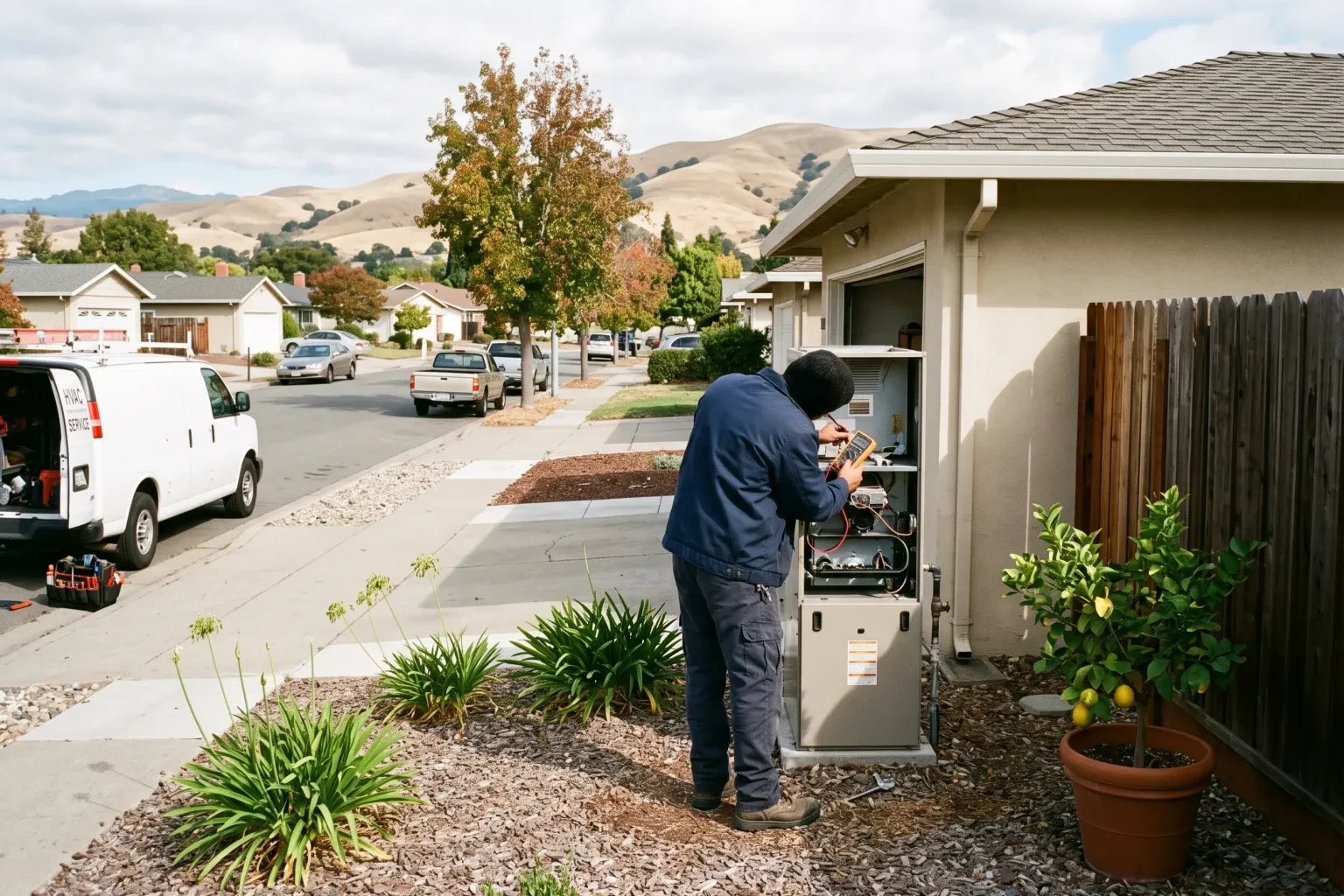
San Jose winters are mild compared with much of the country, but cold, damp nights from late fall through early spring still make a working furnace matter. Many Santa Clara Valley furnaces sit unused through the dry summer, so problems often show up the first time the heat comes on for the season. You might find a burner that won't light, a blower that runs but pushes cool air, or a smell that wasn't there last year. MasterFix HVAC Repair Service diagnoses and repairs gas furnaces in homes across San Jose and nearby cities. We explain what we find in plain terms and give you your options before any work starts. We also offer 24/7 emergency service for when the heat goes out at night.
Signs Your Furnace Needs Repair
Furnaces usually give some warning before they quit completely. Schedule service if you notice any of the following:
If you smell gas or a carbon monoxide alarm sounds, leave the house. Then call your gas utility or 911 from outside. Don't flip switches or try to restart the furnace. Once the utility clears the home, we can come out to find and fix the cause.
- Air from the vents is cool or lukewarm even though the thermostat is calling for heat
- The furnace starts and stops in short cycles, or runs constantly without reaching the set temperature
- Some rooms stay noticeably colder than others
- New noises such as banging, squealing, scraping, or a loud boom at startup
- A yellow or flickering burner flame instead of a steady blue one
- The ignitor clicks repeatedly, or the furnace tries to light and then shuts down
- A burning smell that lasts beyond the first few minutes of the season
- Higher gas bills without any change in how you use the heat
- More dust in the house than usual, or a carbon monoxide alarm going off
What We Check
A furnace that won't heat can have a dozen different causes. Swapping parts until something works wastes your money, so we test before we replace anything. A typical diagnostic covers:
After testing, we tell you what failed and why it likely failed. We also tell you whether anything else is close to failing, so you aren't surprised next month.
- Thermostat settings, wiring, and batteries
- Air filter condition and airflow through the return and supply ducts
- Ignitor or pilot assembly and flame sensor
- Gas valve operation and burner condition
- Heat exchanger, inspected for cracks or corrosion that could let combustion gases escape
- Draft inducer motor, pressure switch, and venting
- Blower motor, capacitor, and belt where applicable
- Limit switches and other safety controls
- Control board fault codes
- Condensate drain and trap on high-efficiency furnaces
Repair or Replace?
Most furnace problems are repairable. Flame sensors, ignitors, capacitors, pressure switches, and blower motors are common fixes. Replacing one of them is usually the sensible choice for a furnace that otherwise runs well. We recommend repair when the issue is isolated and the rest of the system checks out.
Replacement is worth discussing in a few situations: the heat exchanger is cracked, major components fail one after another, or parts are no longer available. It's also worth considering when the furnace is old and the repair would be a large share of what a new system involves. We'll lay out both paths and let you decide.
Local rules matter here. Under Bay Area Air District rules, gas furnaces manufactured from 2029 onward must meet a zero-NOx emission standard. In practice, that points homeowners toward heat pumps when a furnace is replaced after that date. These rules do not require you to replace a furnace that still works. They apply only when equipment fails or is replaced. Repairing a working furnace is still allowed, and it can be a reasonable way to buy time while you plan your next step.
If you're considering a heat pump, note that the federal Energy Efficient Home Improvement Credit (25C) only covered qualifying heat pumps placed in service before December 31, 2025. It isn't available for new installations now. BayREN and your local clean energy provider may offer heat pump and electrification incentives, but amounts and availability change by funding cycle. We confirm the current offer before including it in any quote.
What Affects the Cost of a Furnace Repair
We can't price a repair until we know what's wrong. These are the factors that drive the total:
You get the price for the repair before we start, and you're free to decline it.
- Which part failed, and whether it's a common part or specific to your furnace model
- Parts availability, especially for older or discontinued furnaces
- Labor time, which depends on where the furnace sits (attic, crawlspace, or garage closet) and how easy it is to reach
- Whether the problem is a single failure or several related issues
- Any venting or ductwork corrections needed for the repair to work properly
- After-hours or emergency timing
How a Furnace Repair Visit Works
When you call, we ask what the furnace is doing, roughly how old it is if you know, and whether you smell gas. Your answers help us bring likely parts and decide how urgent the visit is.
At your home, the technician asks a few questions, checks the thermostat, and then works through the furnace step by step. You're welcome to watch or go about your day.
Next, we explain the diagnosis and show you the failed part when we can. We give you repair options with a price for each. If replacement is worth considering, we say so and explain why, without pressure.
Once you approve, we make the repair and run the furnace through a full heating cycle. We confirm that it lights, heats, and vents properly and that air moves well through the house. We finish with simple maintenance suggestions, such as how often to change your filter, to help prevent a repeat visit.
If you live in the hotter inland or southern parts of the valley and rely on central air in summer, ask us to look at the blower and ducts while we're there. Your furnace and air conditioner share those components.
Furnace Repair by city
- Furnace Repair in CampbellLocal service & repairs
- Furnace Repair in Los GatosLocal service & repairs
- Furnace Repair in Santa ClaraLocal service & repairs
- Furnace Repair in Monte SerenoLocal service & repairs
- Furnace Repair in SaratogaLocal service & repairs
- Furnace Repair in CupertinoLocal service & repairs
- Furnace Repair in SunnyvaleLocal service & repairs
- Furnace Repair in MilpitasLocal service & repairs
- Furnace Repair in Los AltosLocal service & repairs
- Furnace Repair in Mountain ViewLocal service & repairs
- Furnace Repair in FremontLocal service & repairs
- Furnace Repair in Los Altos HillsLocal service & repairs