
The short answer
You need duct cleaning when there's visible buildup, debris, pest activity, mold-like growth, or leftover dust from a renovation in your ductwork, not simply because time has passed. MasterFix inspects your ducts first, then recommends cleaning, repair, sealing, or replacement based on what we actually find.
Your ducts carry all the air your heating and cooling system moves, so whatever collects inside them ends up in your rooms. MasterFix HVAC Repair Service cleans and inspects ductwork for homeowners in San Jose, Santa Clara, Sunnyvale, Campbell, Milpitas, Cupertino and nearby cities. Not every home needs duct cleaning on a fixed schedule, and we'll tell you plainly if yours doesn't. When ducts are dirty, damaged or leaking, cleaning and sealing them can reduce dust, help air reach every room more evenly, and take some strain off your furnace or air conditioner. This page explains how to tell whether it's worth doing, what we look at, and what a visit involves.
Signs Your Ducts May Need Cleaning
Most ducts collect some light dust, and that alone isn't a problem. Cleaning makes sense when the buildup is heavy enough to blow back into the house or block airflow. In the Santa Clara Valley, dry summers stir up plenty of fine dust. Mild, damp winters can bring moisture into ducts that run through crawlspaces or attics, especially when insulation or joints are damaged.
- Dust puffs out of supply registers when the system starts up
- You see gray or dark buildup on register covers or just inside the vents
- Furniture gets dusty again shortly after you clean, even with a fresh filter
- You've recently remodeled, sanded drywall, or refinished floors
- Rodents, insects, or nesting material have gotten into the ductwork
- There's a musty smell when the heat or air conditioning runs
- Some rooms get noticeably weaker airflow than others
- You moved into a home and don't know when the ducts were last looked at
What We Check During a Duct Inspection
Before we clean anything, we look at the whole air path, from the return grilles to the farthest supply register. A dirty duct is often a symptom of something else, such as a gap that pulls in attic dust or a filter that doesn't fit its slot. Cleaning without fixing the cause means the dirt comes back. We point out what we find and show you photos when we can.
- Return and supply registers, grilles, and the boxes behind them
- Main trunk lines and branch runs we can reach in the attic, crawlspace, or basement
- Flexible duct for sagging, kinks, crushing, or torn outer jackets
- Joints, seams, and connections for gaps and failed tape or sealant
- Duct insulation for damage, compression, or moisture
- The blower compartment and evaporator coil area for buildup
- Filter size, fit, and condition
- Signs of pests, water intrusion, or growth that needs further attention
Cleaning, Repair, or Replacement: Your Options
Many ducts are in good shape and just need a thorough cleaning. If the structure is sound and the joints are tight, cleaning removes the buildup and that's the end of it.
Sometimes we find problems that cleaning won't fix. Disconnected runs, torn flex duct, and leaky seams can often be repaired. We reconnect sections, replace short damaged pieces, re-hang sagging lines, and seal joints with mastic or approved foil tape. Sealing leaks matters because a leaky return can pull dusty attic or crawlspace air straight into your system, which is often why ducts get dirty quickly to begin with.
Replacement makes more sense when ductwork is badly deteriorated, crushed, contaminated beyond reasonable cleaning, or poorly sized for your system. Older flex duct that has broken down inside, or ducts with water damage, are common candidates. If you're also planning to replace your furnace or add a heat pump, it can be practical to look at the ducts at the same time, since a new system works best with ductwork that fits it. We'll explain the trade-offs and let you decide.
What Affects the Cost of Duct Cleaning
We don't quote a flat number before seeing your home, because duct systems vary a lot from house to house. After the inspection, we give you a clear written estimate. These are the main factors:
- The size of your home and the number of supply and return vents
- How many HVAC systems and air handlers you have
- Where the ducts run and how easy they are to reach, such as a tight crawlspace or low attic
- How heavy the buildup is, and whether there's debris from construction or pests
- Whether you want the blower and coil cleaned too
- Any repairs, sealing, or duct sections that need replacing
- The type of ductwork, such as rigid metal, duct board, or flexible duct
How a Duct Cleaning Visit Works
When you call, we ask a few questions about your home, your system, and what you're noticing, then set up a time that works for you. Our technician starts with the inspection described above and walks you through the findings before any work begins. You'll know what we recommend and why, and you can say yes or no to each item.
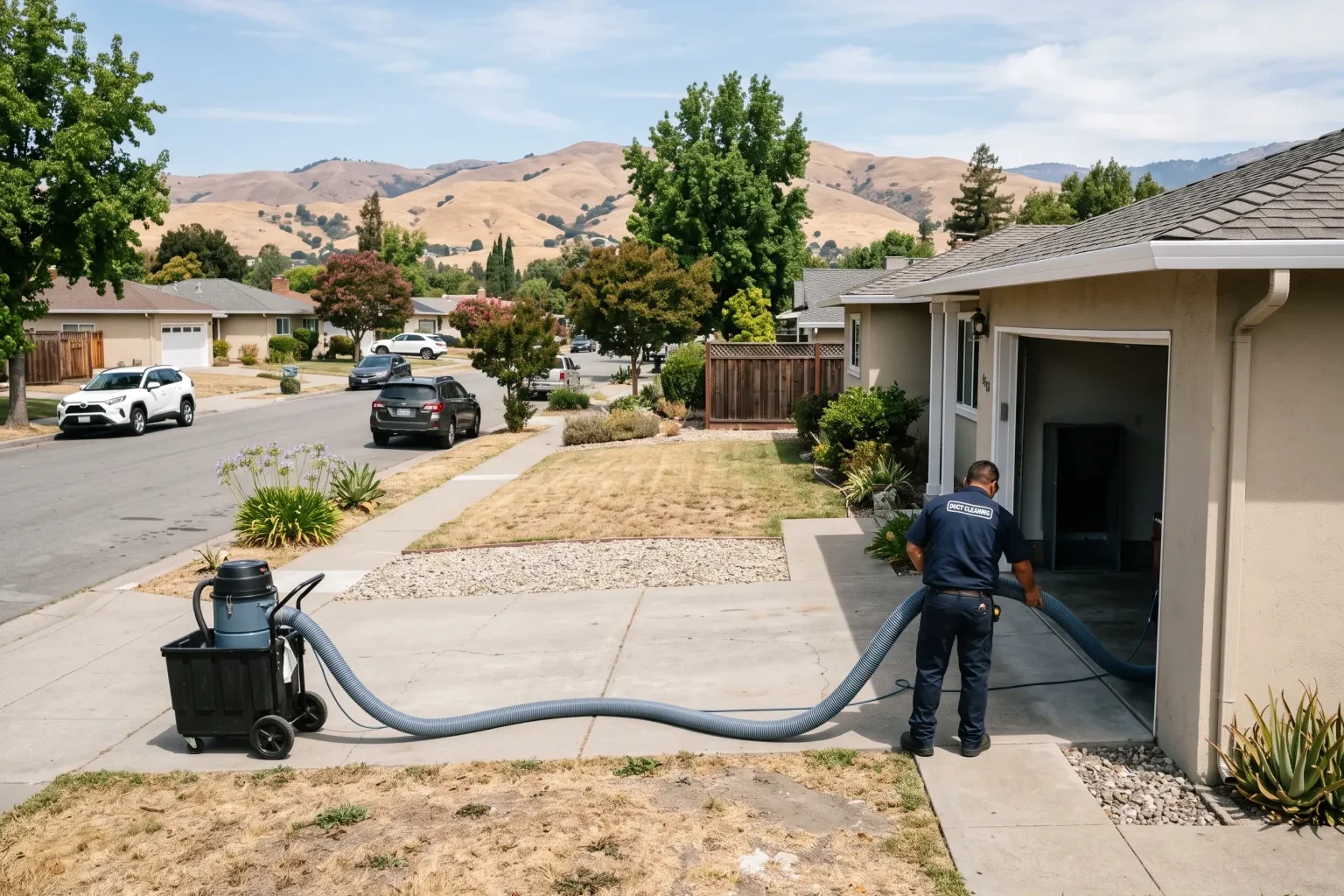
For cleaning, we protect floors and furniture near the work area and cover registers. Then we connect a high-powered vacuum to the duct system to keep it under negative pressure, so loosened dust gets pulled out instead of blowing into your rooms. We use brushes and air tools to loosen buildup in each run, working from the far registers back toward the equipment. If you've approved it, we clean the blower and coil area, then put in a correctly sized filter.
Before we leave, we run the system and check airflow at the registers, clean up the work area, and go over anything we saw that needs attention later. If something more urgent comes up with your heating or cooling, MasterFix offers 24/7 emergency service.