
The short answer
HVAC maintenance is a yearly inspection and cleaning that helps your furnace, air conditioner, or heat pump run safely and efficiently. Schedule it before the season you rely on most, or sooner if you notice weak airflow, new noises, or rising energy bills.
Most heating and cooling problems in San Jose homes don't start with a dramatic breakdown. They start with a dirty filter, a weak capacitor, a clogged condensate line, or a burner that hasn't been cleaned in a few seasons. Regular HVAC maintenance catches those small issues while they're still small. MasterFix HVAC Repair Service maintains furnaces, air conditioners, and heat pumps for homeowners in San Jose and nearby cities. This page covers how to tell your system is due, what a maintenance visit includes, and how we help you decide between repair and replacement when something bigger turns up.
Signs Your System Needs Maintenance
The Santa Clara Valley's dry summers and mild, damp winters mean many systems switch between cooling and heating with only a short break in between. Inland and southern parts of the valley get noticeably hotter in summer than areas near the Bay, so air conditioners there work harder. A good rule is to have your system serviced once a year, ideally before the season you depend on it most. Call sooner if you notice any of these:
Any one of these can have a simple cause. Left alone, some of them put extra strain on motors and compressors, which are among the most costly parts to replace.
- Rooms that heat or cool unevenly, or take longer to reach the thermostat setting
- Weak airflow from vents, even with a clean filter
- New noises such as rattling, squealing, buzzing, or banging at startup
- Musty, burning, or dusty smells when the system first runs
- Higher energy bills without a change in how you use the system
- Water around the indoor unit or furnace, or ice on refrigerant lines
- The system turning on and off in short, frequent cycles
- More dust in the house than usual
What We Check During a Maintenance Visit
A maintenance visit is a hands-on inspection and cleaning, not a quick look. What we check depends on the equipment you have, but a typical visit includes:
When we finish, we walk you through what we found, show you anything that needs attention, and explain which items are urgent and which can wait.
- Air filter condition and fit, with replacement if needed
- Thermostat operation and settings
- Electrical connections, capacitors, and contactors for wear or heat damage
- Blower motor and wheel, cleaned and checked for proper operation
- Outdoor coil cleaning and a check for bent fins, debris, and blocked airflow
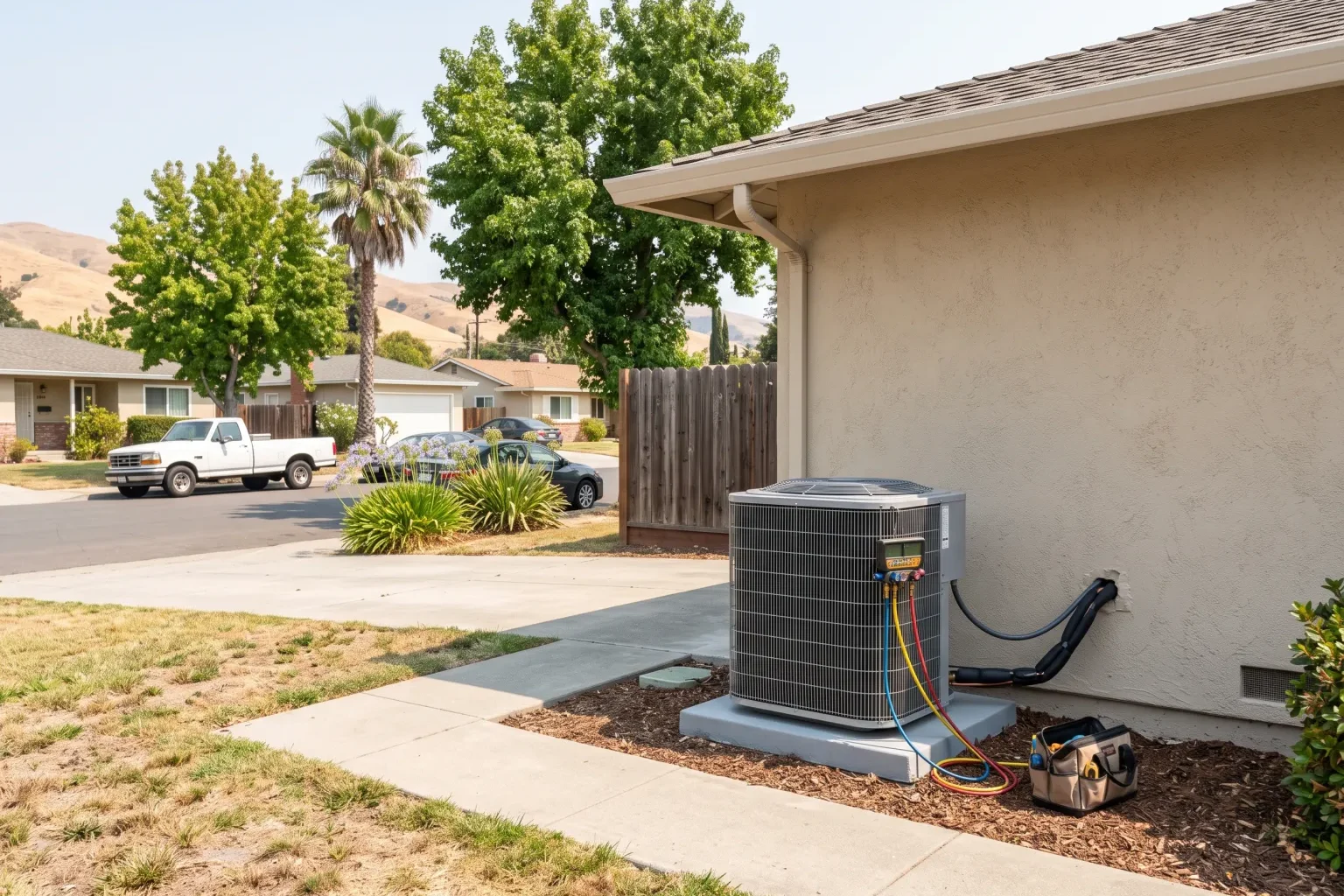
- Refrigerant pressures and temperature difference on air conditioners and heat pumps
- Condensate drain line and pan, cleared to help prevent leaks and water damage
- Furnace burners, flame sensor, and ignition system
- Visual inspection of the heat exchanger for cracks or corrosion
- Flue and venting checked for proper draft
- Safety controls and limit switches tested
- Heat pump defrost operation and reversing valve function
Repair or Replace: Your Options
Sometimes maintenance turns up a problem that needs more than cleaning. When that happens, we lay out your options plainly. Many issues, like a failed capacitor, a worn igniter, a clogged drain, or a dirty flame sensor, are straightforward repairs that make sense on almost any system.
Replacement is worth discussing when a system is older, needs a major component like a compressor or heat exchanger, breaks down repeatedly, or no longer keeps the house comfortable. We tell you what we see and let you decide. A working system doesn't have to be replaced just because it's older.
If you have a gas furnace, it helps to know where local rules are heading. Under Bay Area Air District rules, natural gas furnaces manufactured from 2029 on must meet a zero-NOx emission standard, which in practice points homeowners toward heat pumps when a furnace is replaced after that date. These rules don't require replacing working equipment; they apply only when an existing furnace or water heater fails or is replaced.
If you're considering a heat pump, check BayREN and your local clean energy provider for current incentives. Amounts and availability change by funding cycle, so we confirm the current offer before quoting it. The federal tax credit for heat pumps covered only systems placed in service before December 31, 2025, and isn't available for new installations.
What Affects the Cost
We don't quote prices without knowing your system, but these factors shape what a maintenance visit or follow-up repair involves:
We explain any additional work before we start it, and nothing beyond the agreed maintenance happens without your approval.
- Type and number of systems, such as a furnace with central air, a heat pump, a ductless mini-split, or more than one unit
- How long it's been since the last service, since heavily soiled coils and blowers take longer to clean
- Access, because equipment in a tight attic, crawlspace, or on a roof takes more time to service
- Parts needed, such as filters, capacitors, or igniters
- Whether you choose a one-time visit or ongoing scheduled maintenance
- Timing, since emergency calls outside normal hours differ from scheduled visits
How a Maintenance Visit Works
You can schedule maintenance at a time that works for you. We also offer 24/7 emergency service if your system stops working on a hot afternoon or a cold night.
Our technician will need clear access to the furnace or air handler, the outdoor unit, the thermostat, and the electrical panel. Between visits, check your filter monthly and keep plants and debris a couple of feet away from the outdoor unit.
- When you book, we confirm your equipment type and any problems you've noticed
- A technician arrives, asks how the system has been running, and checks the thermostat
- We inspect and clean the indoor and outdoor equipment
- We test operation in heating and cooling modes where applicable
- We review findings with you, recommend any repairs, and answer your questions